
Carrots are a staple in the global food industry, prized for their beta-carotene content and versatility. For food processing factories, extending the shelf life of carrots while maintaining their nutritional value is a critical challenge. The solution lies in choosing the right dehydration technology. The hot air oven dryer has emerged as the industry standard for producing high-quality dried carrots.
In this comprehensive guide, we will explore the step-by-step process of drying carrots and analyze why the hot air oven dryer is the preferred equipment for professional food processors.
Why Choose a Hot Air Oven Dryer for Carrots?
Before diving into the process, it is essential to understand the machinery. A hot air oven dryer is not just a heating box; it is a sophisticated thermal system designed for uniform moisture removal. Unlike traditional sun drying, which depends on weather, or freeze-drying, which is expensive, the hot air oven dryer offers the perfect balance of cost-efficiency and quality.
The hot air oven dryer utilizes a forced air circulation system. This ensures that heated air passes through the carrot slices evenly. The precise temperature control of a modern hot air oven dryer prevents the “case hardening” effect, where the outside dries too fast while the inside remains moist.
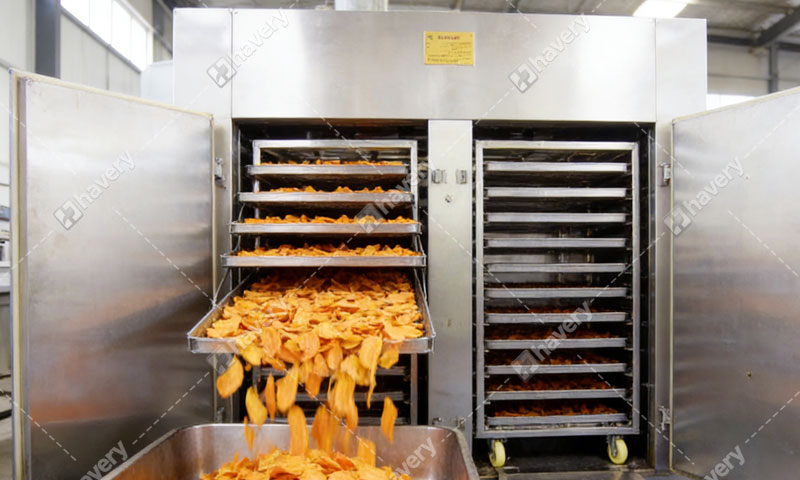
Step-by-Step Guide: Drying Carrots with a Hot Air Oven Dryer
To achieve premium dried carrots with a bright orange color and good rehydration properties, you must follow a standardized process combined with the capabilities of your hot air oven dryer.
1. Selection and Cleaning
High-quality dried products start with high-quality raw materials. Select fresh, firm carrots with no signs of rot. Before the carrots enter the hot air oven dryer, they must be thoroughly washed to remove soil and pesticide residues. An industrial bubble washing machine is usually recommended here.
2. Peeling and Slicing
Peel the carrots to improve the texture of the final product. Next, slice the carrots into uniform shapes (cubes, strips, or slices). Uniformity is crucial. If slices vary in thickness, the hot air oven dryer will not be able to dry them evenly—thin slices might burn while thick slices remain wet.
3. Blanching (Critical Step)
Do not skip this step. Blanching carrots in boiling water (or steam) for 2-4 minutes deactivates enzymes that cause discoloration and loss of flavor. After blanching, cool them immediately. This step ensures that when the carrots are processed in the hot air oven dryer, they retain their vibrant orange color.
4. Loading the Hot Air Oven Dryer
Spread the blanched carrot slices evenly on the drying trays. Do not overload the trays. Overlapping slices will obstruct the airflow within the hot air oven dryer, leading to uneven drying and longer processing times.
5. The Drying Process
This is where the hot air oven dryer demonstrates its value.
- Initial Phase: Set the hot air oven dryer temperature to approximately 70°C. The high initial heat helps evaporate surface moisture quickly.
- Middle Phase: Lower the temperature to around 60°C. The hot air oven dryer will continue to remove internal moisture through consistent air circulation.
- Final Phase: Toward the end, reduce the temperature to roughly 55°C to bring the moisture content down to the target level (usually 6-8%) without scorching the product.
The entire cycle in a hot air oven dryer typically takes 6 to 8 hours, depending on the slice thickness and the machine’s capacity.
Technical Advantages of Our Hot Air Oven Dryer
Why is our specific hot air oven dryer the best choice for your production line? It comes down to professional configuration and engineering.
Superior Air Circulation System
The efficiency of a hot air oven dryer depends on airflow. Our machine is equipped with high-efficiency axial flow fans and a scientifically designed air duct system. This ensures that hot air circulates horizontally and vertically, covering every corner of the drying chamber. This means every carrot slice inside the hot air oven dryer receives the same thermal treatment.
Precise Temperature and Humidity Control
Our hot air oven dryer features an automatic control system (often PLC-based). You can set precise temperature curves. Furthermore, the hot air oven dryer is equipped with an automatic moisture exhaust fan. When humidity inside the oven exceeds the set limit, the fan activates, expelling moist air and intaking fresh dry air. This automation makes the hot air oven dryer easy to operate and reduces labor costs.
Energy Efficiency and Insulation
Operating costs are a major concern for factories. Our hot air oven dryer is built with a high-density rock wool insulation layer between the inner and outer stainless steel walls. This minimizes heat loss, ensuring that the energy consumed is used strictly for drying carrots. Whether you choose an electric, steam, or gas-powered hot air oven dryer, the thermal efficiency remains high.
Food Grade Construction
Sanitation is non-negotiable. The interior of our hot air oven dryer, including the baking trays and the trolley, is made of SUS304 stainless steel. This makes the hot air oven dryer fully compliant with GMP and HACCP standards, ensuring your dried carrots are safe for export markets.
Conclusion
Drying carrots requires more than just heat; it requires precision, airflow, and control. The hot air oven dryer provides the technology needed to transform raw carrots into a high-value, shelf-stable commodity. By investing in a high-quality hot air oven dryer, you ensure consistent product quality, optimize energy usage, and maximize your production profits.
If you are looking to upgrade your carrot processing line or need a customized drying solution, the hot air oven dryer is your answer.
Ready to enhance your drying efficiency? Contact us today to get a quote and technical specifications for our advanced hot air oven dryer. Our engineers are ready to help you design the perfect drying line for your factory.