
In the global frozen vegetable market, quality is defined by texture, color, and nutrient retention. For food processors, mastering the iqf carrot cube freezing process is not just about preservation; it’s about delivering a product that looks and tastes fresh-picked after thawing. To achieve this, choosing the right frozen carrot cube machine is the most critical investment your facility will make.
In this comprehensive guide, we will break down the technical stages of the IQF (Individually Quick Frozen) process and explain how modern machinery ensures every carrot cube meets international export standards.
1. The Science of IQF: Why Carrot Cubes?
Carrots are high in moisture and cellular structure. Standard slow-freezing methods lead to the formation of large ice crystals, which rupture cell walls, resulting in “mushy” carrots upon defrosting.
The iqf carrot cube freezing process solves this by rapidly lowering the temperature of each individual cube. By passing the “Maximum Ice Crystal Formation Zone” (usually 0°C to -5°C) in minutes, the water inside the cells forms micro-crystals, preserving the integrity of the carrot’s fiber.
2. Step-by-Step Breakdown of the IQF Carrot Cube Freezing Process
To produce a premium product, the frozen carrot cube machine must operate within a synchronized production line. Here is the professional workflow:
Stage 1: Pre-Processing (Washing and Peeling)
Before entering the freezer, carrots must be thoroughly cleaned and peeled. Any residual soil or skin will compromise the hygiene of the frozen carrot cube machine.
Stage 2: Precision Dicing
Uniformity is key. If cubes are uneven, they will freeze at different rates. A high-performance dicing unit ensures that 10x10mm or 6x6mm cubes are consistent, which is vital for the airflow efficiency inside the IQF tunnel.
Stage 3: Blanching and Cooling
This is a critical “make-or-break” step in the iqf carrot cube freezing process. Blanching inactivates enzymes like peroxidase that cause off-flavors and discoloration. Immediately after blanching, the cubes must be chilled to 5°C-10°C to prevent overcooking and to reduce the thermal load on the frozen carrot cube machine.
Stage 4: De-watering
Excess surface moisture leads to “clumping” or “snowing” inside the freezer. A vibratory de-watering conveyor or an air-knife system is used to ensure only the carrot cube enters the freezer, not the surrounding water.
Stage 5: Fluidized Bed Freezing
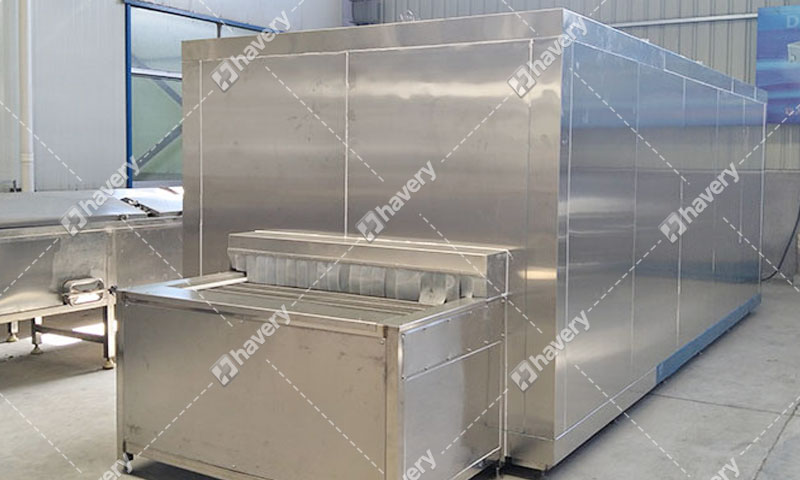
This is the heart of the iqf carrot cube freezing process. The frozen carrot cube machine (typically a Fluidized Bed Freezer) uses powerful fans to blow cold air (up to -40°C) upward through a perforated belt.
- Suspension: The carrot cubes “float” in the cold airstream.
- Individual Freezing: Because they are suspended, they do not stick to each other or the belt.
3. Technical Specifications of a Premium Frozen Carrot Cube Machine
When sourcing a frozen carrot cube machine, technical parameters dictate the ROI. High-end systems focus on:
- Evaporator Efficiency: Using large-surface-area aluminum or stainless steel coils to maximize heat exchange.
- Airflow Control: Frequency-controlled fans allow operators to adjust air pressure based on cube size (e.g., 5x5mm vs 15x15mm).
- Hygienic Design: Look for a frozen carrot cube machine with an integrated CIP (Cleaning In Place) system and sloped floors for easy drainage.
- Insulation: High-density PIR panels (at least 120mm to 150mm thick) to prevent energy loss.
4. Influencing Factors: Carrot Cube Quality & Output
The efficiency of your iqf carrot cube freezing process is influenced by several variables:
| Factor | Impact on Process | Solution |
| Input Temperature | Higher heat increases freezing time. | Optimize the pre-cooling stage. |
| Sugar Content | High Brix levels lower the freezing point. | Adjust frozen carrot cube machine belt speed. |
| Surface Moisture | Causes ice buildup on evaporators. | Use high-frequency vibratory de-watering. |
5. Maintenance and Long-Term Reliability
A frozen carrot cube machine is a long-term asset. To maintain a 3% or lower dehydration loss during the iqf carrot cube freezing process, regular maintenance is required:
- Defrosting Cycles: Ensure the “Air Defrost” or “Water Defrost” system is functioning to keep the evaporator clear.
- Belt Tension: Stainless steel or plastic modular belts must be checked to prevent “tracking” issues.
- Lubrication: Use food-grade lubricants capable of withstanding -40°C temperatures.
Conclusion: Elevating Your Production Standards
The iqf carrot cube freezing process is a delicate balance of thermodynamics and mechanical engineering. By investing in a high-quality frozen carrot cube machine, you are not just buying a freezer; you are securing the texture, color, and nutritional value that your clients demand.
Whether you are a medium-scale farm looking to add value to your harvest or a large-scale food processor expanding your line, understanding these technical nuances is the first step toward market leadership.
Join the Conversation!
We hope this technical deep-dive helps you optimize your production line. Do you have questions about the specific electricity consumption of a frozen carrot cube machine? Or perhaps you’ve encountered challenges with clumping in your iqf carrot cube freezing process?
Please leave a comment below! Our engineering team monitors this blog and will provide professional feedback to help you solve your processing bottlenecks.